Sunday, June 19, 2011

Red Stick Farmers Market

Photobucket

My Saturday morning routine includes a visit to the Red Stick Farmers Market. This week, I remembered my camera, and I want to share with you why I love the market as I do.

I started my morning with a pint of Smith's Creamery chocolate milk. I normally get a half-gallon of chocolate milk for Drew just before heading home, but since he's galavanting about the country, I treated myself first thing!


Photobucket


I love seeing all the fresh produce! This time of year is fabulous for tomatoes, peppers, and potatoes! Glaser's Produce Farm has a fantastic variety from which to choose, and Fletcher Farms, from whom I bought my strawberries for the fabulous strawberry vodka, now has some of the prettiest tomatoes around.


Photobucket


Photobucket

Of course, Chenier Farms has excellent Brandywine and other tomatoes, too, and other vendors have grape and cherry tomatoes. Mmm mmmm good!


Photobucket


Eggplants take center stage, too. So many varieties to choose from! Here are a couple of choices from Glaser's Produce Farm.


Photobucket

Squash and onions get along famously ... I can get my fill of each from many vendors, but here are some selections from Chenier Farm.


Photobucket


Photobucket


Chenier Farm also sells the best honey around and is my supplier for fuyu (or kaki, as some call them) persimmons. These persimmons won't be ripe until the fall, but trust me: they are worth a try! They are not like the tart American persimmons, but are instead sweet when green and crisp or orange and fully ripe. Oh, how I love a fuyu persimmon!

Another great combination is goat cheddar cheese with apples! When I was in high school, my dear friend Eve introduced me to this combo, and I've been grateful ever sine. Here, I've selected Ryals' Goat Farm cheddar cheese to accompany Beard's Farm freshly picked apples ... ahhh, it doesn't get much yummier than this:


Photobucket


Photobucket

My favorite new farm is Robertson Organic Farm. It's located in Baton Rouge, and is one of the few farms that is actually certified organic. I couldn't resist a carton of okra ... olive oil, Tony Cachere's, and a grill are all you need to make a tantalizing okra!


Photobucket

I like to get extra okra to slice and freeze for a nice winter gumbo, too! And what is perfect with gumbo? Fresh file, of course ... and rice! I like to watch Uncle Bill grind the sassafras roots into his famous Creole File, and I love the smell of Cajun Grain's organic brown jasmine rice cooking on the stove. Just thinking about this makes me want a bowl of gumbo, till I remember that it's nearly 100* every day.

Of course, there are a few people that everyone knows. Mr. Buddy loves giving out pecan samples from his Plantation Pecan Company, but this time of year, his booth features peaches!


Photobucket

The blueberry farm dude (a.k.a. the black bear dude, since he is one of the Louisiana black bear experts, as well) is eagerly waited for each year. His farm is not certified organic, but employs organic methods in its fields.


Photobucket


Mila loves sharing growing tips with interested market goers. I buy almost all of my plants from Greenhand Nursery because of Mila's extensive knowledge and gorgeous plants.


Photobucket


Photobucket

Or, if you don't grow your own flowers, you can pick up a bouquet from one of several vendors.


Photobucket


This week, there was a fun game: "Guess How Many Tomatoes!" I didn't win.


Photobucket


And most weeks, there is a demonstration of some sort. This week, Forte Grove Bakery based in Plaquemine, Louisiana provided the entertainment with a canning demonstration.


Photobucket


I oscillate between Forte Grove and SaySaye's Village Bakery. I just love SaySaye's braided French bread and apricot spread!


Photobucket

Of course, there is other entertainment, too! There is sometimes a kids' booth with kid-oriented activities, or maybe an informational booth from the Master Gardeners' Association, or a useful thing like the knife sharpening skills of Doyle Hanson.

And music: of course there is music. No Louisiana function is complete without music! There are different musicians playing outside every week, and sometimes the dulcimer society has a jam session inside.


Photobucket


I admit that I can sit for hours listening to the musicians who grace the market with sound each week.


Photobucket

But there is so much more, too! There's the *other* goat cheese vendor, Belle Ecore, whose venture began because somebody gave her two goats ...


Photobucket

... and Nur's Kitchen, with delicious hummus (also available at Whole Foods), stuffed grape leaves, and my favorite red lentil balls ...

Photobucket


... and fresh seafood and meat and chicken and eggs ...


Photobucket

... and, well, why don't you try it for yourself? There are so many more choices and more vendors than I can possibly mention here!

And, on the first Saturday of each month, the farmers are joined by artists for the Arts Market ... but it would take another entry to describe the wonders of the arts.

See you Saturday! I'll be there bright and early.

Saturday, June 4, 2011

Wow, it's hot.

Wow, it's hot. June 1st ... over 100*. June 2 ... over 100*. June 3rd ... yep, you get the idea.

And windy! We have had a very windy spring this year, with 10 - 20 mph winds being the norm.

So what does all this mean for the garden? It is dry! There has been very little rain around here for the past four months, and the plants have to be watered quite frequently. I have been watering every other day, but the combination of heat and wind this week has resulted in a need for daily watering, especially of the vegetables.


Photobucket


The good news is that although it is too hot for most of the tomatoes to set fruit, the strawberry tomatoes seem to like the heat. Not only is the first strawberry tomato finally ripening, but it is a prolific producer: one vine has well over 100 tomatoes set right now! It is such a sweet variety, and I've only tried the ones from the store. I cannot wait to sample freshly picked ones and see how sweet these really can be!


Photobucket


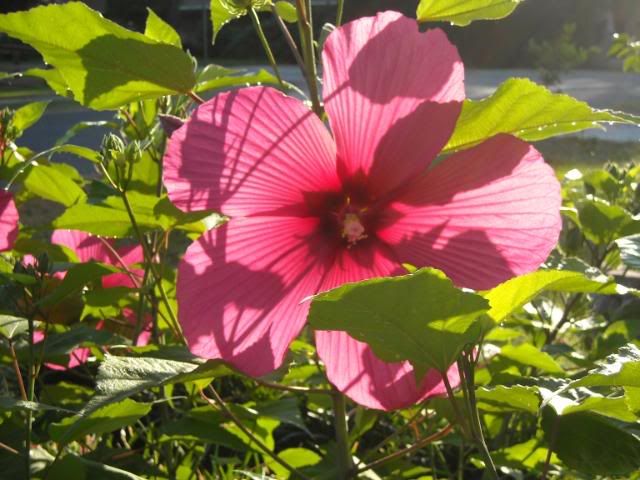
The dinner plate hibiscus is another summer garden keeper. This plant loves the heat and produces quite a fantastic display once it starts blooming. It's gotten plenty of water since it is surrounded by veggies, but the lack of rain has resulted in a slightly smaller bloom than usual. Still, nearly 11" across isn't too bad!

I hear thunder outside right now, but there is no evidence of water falling from the sky to relieve my poor, dry gardens. Amazingly, the water just 50 yards away - the Mississippi River is at flood stage - is about 20' higher than my yard at the moment. Thankfully, that water is safely behind a levee!


Photobucket


Fortunately, however, the fruit trees seem to be okay. The high water table because of the river and the long roots of the fruit trees have kept them healthy, despite our strange weather pattern this year.

Monday, May 2, 2011

Strawberry-Loquat Jam

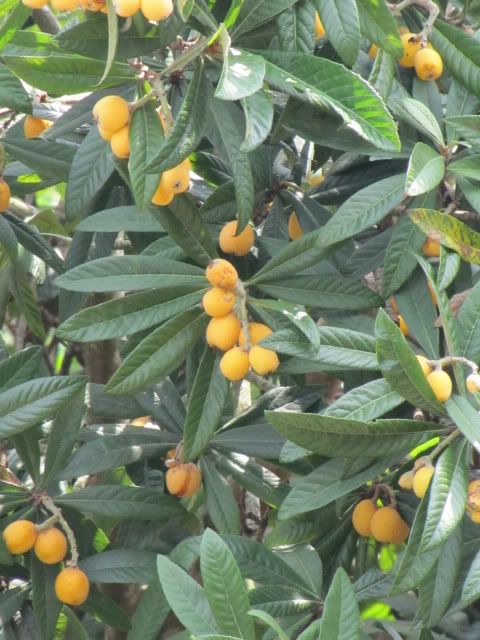
When I moved into my house seven (SEVEN?!) years ago, I had no idea what a loquat was. Sure, I'd seen the bushes here and there, adorned with pretty fruit at weird times during the year, but I didn't really know what it was.

And then, nearly a year after we moved in, my neighbor invited me to try a few Japanese plums. I wasn't sure about it, but he'd been eating them for years, and he was still alive. Right? Right.

The *huge* loquat tree that overhangs my fence.
Photobucket


So I tried one ... and then another ... and Drew and I couldn't stop! They were so incredibly delicious, like a sweet, juicy plum filled with gorgeous copper seeds. And I love plums!

I learned that the "proper" name for this plant is a loquat (or an Eriobotrya japonica, if you want to get really technical), though they are commonly called Japanese plums around here and Chinese plums in some other areas. It is edible, though the seeds - which are prolific sprouters, by the way - and the leaves apparently contain some deadly toxin, like cyanide.


A better view of the delicious Japanese plums.
Photobucket


This year, the neighbor's loquat is simply loaded. We've picked and picked from the tree, and it hardly looks like there are any missing. So, as usual when there is an abundance of something edible growing nearby, I try to come up with some use for it.

And since strawberries are in season, too, and since I happen to have some jelly jars and other necessary supplies, I decided to make strawberry-loquat jam.

Drew and I picked as many fruits as we could ... or, that is, until our arms were too tired to pick any more. We brought them inside and I washed them well. Then I squeezed the juice from the loquats until my hands were too weak, then I recruited Drew to squeeze the rest.


Washed and ready to be juiced.

Photobucket


I decided to make freezer jam since it doesn't require any proper canning techniques. I began by cooking the loquat juice with the pectin, then added strawberries and sugar (and a little local honey!) to finish it off. It seemed a little sweet, but I figured I could live with that. Once the jam was ready, I placed in freezer jam containers and placed it in the fridge so that it could set before freezing.


Strawberry-Loquat Jam

Photobucket

The real test, however, would be how it tasted on a biscuit. Since I couldn't wait to find out, we changed our dinner plans from pork chops with a parsley pesto and cherry tomato pasta to (freshly laid) scrambled eggs with extra sharp cheddar cheese and hot buttermilk biscuits.


Surely this needs no explanation.

Photobucket


While I thought the jelly was too sweet when sampled on a teaspoon, it was actually just right. I can imagine this glazing a nice brie served with water crackers or layered, perhaps, in a lovely goat cheese torte. But on a piping hot, fresh from the oven biscuit? Divine! This strawberry-loquat jam definitely passed the test.

Sunday, April 10, 2011

Amaryllis by morning ...


In 1996, I bought my first house. By the spring of 1997, I had my first amaryllis.


My neighbor, Sheryl, was an avid gardener, and I was definitely a beginner. She watched me move a raised bed in 100* + temps when I was 8 months pregnant; she gave me lots of advice about native plants; and, best of all, she shared some amaryllis bulbs with me that first spring.

Photobucket


Sheryl said that they would grow anywhere, so I initially stuck them all in an old whiskey barrel with a little dirt in it. They thrived. Sheryl said that they would multiply like crazy. They did. Over the years, I shared some with my mom and other people. When I eventually moved, a few amaryllis bulbs joined me. When I moved again, I was happy that I had shared with my mom, because I was able to replenish my supply.


Photobucket


Now, in what I hope is my forever house, I still enjoy the bright reddish-orange blooms that shock the senses every spring. As Sheryl promised, they grow anywhere, and they're still multiplying like crazy.


Who knew that Sheryl's simple act of kindness would bring me so many years of joy? She did. Yes, she knew, because she, too, had been given her first bulbs by a kind soul, and she had enjoyed them for years before passing the treasure along to me.


Friday, March 25, 2011

Apples vs. Oranges ... blossoms, that is.

Well, it's apples vs. satsumas in my yard. But both are in bloom and both smell divine!

Citrus, as you may know, grows quite well in south Louisiana. I planted my own citrus - a satsuma, an orange, and a kumquat - a few years ago, after I discovered that my son has quite a taste for it. The kumquat has been productive, the orange tree died during an extended freeze, and the satsuma has yet to produce a ripe fruit.

Yet the satsuma makes flowers each year, and this year - the third year after being planted - is no exception. Every time I walk outside, I can smell the blossoms in the air. The bees can, too, and have been busily working to pollinate all the flowers!


Photobucket


Citrus is big here, as are figs and blueberries, and my pear is quite productive, too. But apples? Well, two of my co-workers have apples trees - actually, two of my co-workers' mothers have apples - but they bring them in now & then ... though I must report that they never share.

So last year, in my effort to expand my mini-orchard, inspired by my co-workers and with much help from the folks at Stark Bro's nursery, I found two apples that will grow in my warm climate. Grow AND hopefully produce fruit one day!


Photobucket


After talking to Stark Bros. customer service, reading its website, and doing some research on my own, I settled on two dwarf apple trees: Winter Banana Antique and a regular old Golden Delicious. While red delicious and a couple of others were recommended for pollinating my Winter Banana, none of the selections were recommended for my zone. The Golden Delicious, on the other hand, is, plus it is self-pollinating, which greatly increases my chance of getting apples from at least one tree.

The Winter Banana, which is reported to have a "subtle aroma of banana," was the first to leaf our and bloom this year.


Photobucket

The first few leaves came out, and I anxiously awaited the blossoms. My pear tree is generally covered in blossoms before any green leaves appear, so I thought that maybe I would have to wait until next year to see an apple blossom.

Imagine my delight, however, when I saw these buds!

Photobucket


Who knew apples began their blossoms in pink? Just lovely.

On the same day, I noticed that another branch had blossoms ... real, true, live apple blossoms. All the way down here at the top of Zone 9. Of course, I had to have a little sniff, since I am so spoiled with satsuma blossoms right now.

Photobucket


The smell is so sweet and lovely, I just can't describe it. It's different than the citrus and even the pear, with its light and delicate scent. It's not bold, like the satsuma, or elusive, like the pear, but just a very sweet and welcome addition to my life experience.

I am so happy with my apple trees, even if it is another or two before I see a fruit. The words attributed to Martin Luther remain ever true today:

"Even if I knew that tomorrow the world would go to pieces, I would still plant my apple tree."

Saturday, March 19, 2011

Broccoli

As my non-southern friends begin starting their broccoli seeds - a thought nearly incomprehensible in southern Louisiana March - I am reminded of what a nice broccoli harvest I had this year.

Broccoli is such a lovely winter plant down here, adding lush greenery to the yard while producing a yummy vegetable treat.

Photobucket


As the broccoli heads grew, I harvested them. As the side-shoots developed, I harvested those, too. And when I could see that it was nearly ready to flower, I harvest the remaining broccoli shoots that were large enough, and we had broccoli for dinner more nights than I care to remember!

Photobucket


And then, within 10 days, the little shoots that were too tiny to harvest turned into beautiful, bright, and cheery plants that drew compliments from passers-by. Little did they know that the broccoli plants were spent and nearly ready to move from the garden.


Photobucket


Now that winter is over, my spring and summer garden begins. The pear tree and blueberry bushes are coming along quite nicely, and I'm working on removing winter's build-up of weeds so that I can start my tomatoes and peppers and cucumbers for a summer of yumminess.

But I will miss my broccoli.

Thursday, February 10, 2011

Micro-Gardening

I like to practice what I call micro-gardening. Instead of having a traditional vegetable garden where I overwhelm my neighbors with cucumbers and cabbages, I try to grow just enough for my household to eat while it's in season.

Right now, for instance, I have two heads of cabbage, two bok chois, four broccolis, two tiny Brussels sprouts, a few lettuces, one parsley plant, two cilantro plants, and a few green onions. (Stay tuned for a future post on green onions!) The bok choi and lettuce have provided much seasonal delight, and the cabbage heads are developing nicely. We've eaten the main heads on the broccolis and now we've got a few side shoots sprouting, awaiting our eager appetites. I planted two more broccoli plants, but I forgot to cover one of them during a recent night in the low 20s. Oops!!

Photobucket

In the spring, I'll plant a few tomato plants, a couple of cucumber seeds, three or four varietiers of peppers, a few okra seeds, some beans of various varieties, maybe an eggplant or two. This is enough to feed us fresh veggies every day while they are in season, with maybe enough extra to freeze some okra for a good winter gumbo.

Amazingly, however, there's always enough to share. My little neighbor likes grape tomatoes, and no matter how many he munches, there's always enough for our own dinner. One cucumber plant gives us more than one cuke per day .. and really, how many more than one per day can a person eat?! So the excess go to my office or my mom or neighbors who are on my walking route. And eggplant: one bush gives us three to four eggplants per week! Roasted, grilled, dips & spreads ... it's all yummy, but geezum, that is just way too much eggplant for me!

Photobucket

So ... I practice micro-gardening in theory, but somehow it turns into plenty enough to share. Amazing.